
The Kids We Don’t Always See
Inclusion is not only who gets invited. It is who feels represented.

For some children, stories can do something powerful:
They can say:
You are not the only one.
And for a child, that can matter deeply.
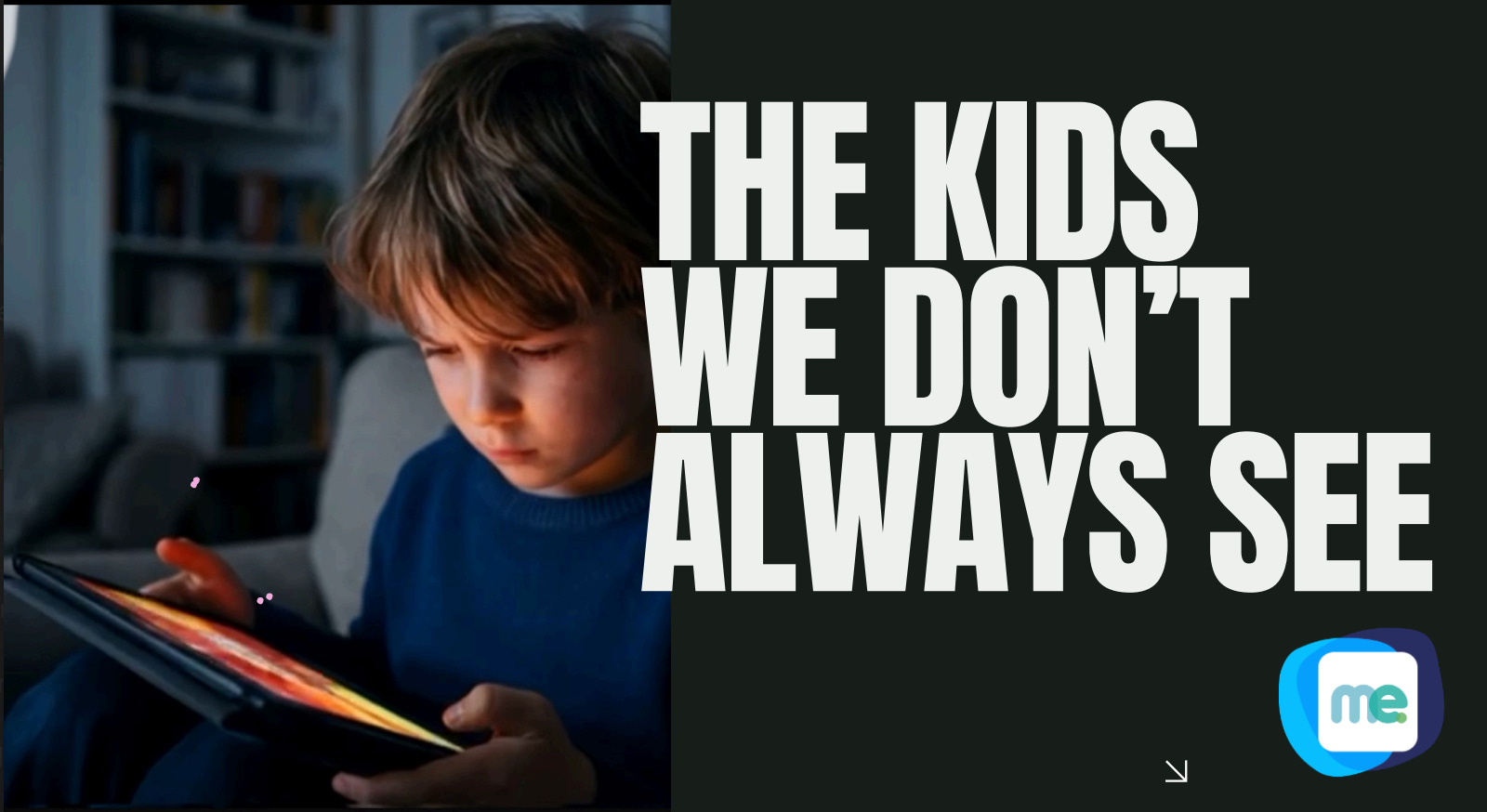
Not every child feels included in the same way
Some kids are naturally visible.
They are the ones who raise their hands.
The ones everyone knows.
The ones who get picked first.
The ones who are funny, sporty, creative, social, confident.
But many children live more quietly.
The child who feels emotions too big to explain.
The child who has traditions at home that nobody at school talks about.
The child who wants to play music but doesn’t see themselves as “the kind of kid” who joins the band.
The child who is shy, anxious, neurodivergent, different, new, sensitive, or simply not part of the dominant group.
These children may not need a stage.
They may need a mirror.
Inclusion is also emotional language
When kids cannot find the words for what they feel, stories can lend them words.
A character who feels overwhelmed.
A child who misses home.
A kid who gets embarrassed in class.
A friend who feels left out.
A young musician who is afraid to perform.
A family that celebrates the same traditions they do.
This is not “just content.”
This is emotional vocabulary.
This is how a child begins to think:
“That happens to me too.”
“Maybe I can say it.”
“Maybe I am not strange.”
“Maybe there is a place for me.”
Research on children’s media keeps pointing us away from the simple question of how much screen time and toward a better question:
What kind of content, in what context, and with what adult guidance?
A 2026 longitudinal study found that parental joint media engagement mattered more than screen time or restrictive rules alone for supporting young children’s prosocial behavior. In parent language: watching with children, talking about what they see, and helping them interpret it matters.
The data is clear: representation matters
Representation is not decoration.
When a child sees a character with their traditions, their accent, their family structure, their hair, their neighborhood, their fear, or their dream, something changes.
They are not just watching.
They are locating themselves in the world.
Common Sense Media reports that media influences what children think, feel, and understand about race as they develop. Their research found that:
57% of parents say it is important for children to see people of their own race or ethnicity in media.
70% of parents want media that exposes children to more about their family’s culture, religion, or lifestyle.
65% of parents believe media has a big impact on children’s professional aspirations.
63% of parents believe media affects what children understand about people of other races, ethnicities, religions, and cultures.
That is not small.
Media does not only entertain.
It helps children answer quiet questions:
Who gets to be the hero?
Who gets to be smart?
Who gets to be brave?
Who gets to be loved?
Who gets to belong?
Stories can help children understand themselves — and others
Inclusion is not only about seeing yourself.
It is also about learning to see someone else.
When children encounter stories about different families, cultures, abilities, emotions, languages, and dreams, they build a wider map of the world.
They learn:
My way is not the only way.
Different does not mean wrong.
Someone else’s story can matter too.
Research on quality children’s programming shows that thoughtful content can support learning and social understanding. A meta-analysis of 24 studies across more than 10,000 children in 15 countries found that exposure to international versions of Sesame Street had positive effects across cognitive outcomes, learning about the world, and social reasoning/attitudes toward out-groups.
That matters because empathy is not automatic.
It is practiced.
Stories give children a safe place to practice it.
Stories can support behavior and values
Children imitate what they see.
They repeat language.
They copy gestures.
They absorb conflict styles.
They learn what is funny, what is normal, what is powerful, and what is acceptable.
This is why content quality matters more than we sometimes admit.
Research has shown that prosocial content can support empathy, cooperation, and positive social behavior. Studies of children’s media have found that slower, more thoughtful, prosocial programming is associated with stronger sharing and social outcomes than fast-paced, overstimulating content.
So the question is not only:
“Is this appropriate?”
It is also:
“What is this teaching my child to value?”
The hidden question: who gets to be the hero?
In many classrooms, inclusion is talked about socially:
Who gets invited?
Who gets picked?
Who gets included in the game?
But stories add another layer:
Who gets to be the hero?
Who gets to be smart?
Who gets to be brave?
Who gets to be funny?
Who gets to be sensitive?
Who gets to be artistic?
Who gets to be powerful?
Who gets to be loved?
If the same type of child is always centered, children learn that visibility belongs to a few.
But when stories show many kinds of children as worthy, capable, complex, and loved, they teach a wider truth:
There is more than one way to matter.
For the kids on the edge
This is especially important for children who are not always centered.
The quiet child.
The sensitive child.
The child who feels “too much.”
The child who is still learning the language.
The child whose family traditions are different.
The child with a dream that feels far away.
The child who watches others before joining in.
These children may not ask directly:
“Do I belong?”
But they are often looking for the answer.
And stories can help answer it.
A child who sees another child struggle with big feelings may feel less alone.
A child who sees a family tradition like theirs may feel proud instead of different.
A child who sees someone learning an instrument, joining a band, or trying again after failing may think:
“Maybe I can do that too.”
This is where parents and schools can help
We can choose stories that do more than fill time.
Stories that:
Help children name emotions
Show different kinds of families and traditions
Normalize kindness, repair, effort, and courage
Center children who are not always the loudest
Show many paths to confidence
Build empathy for people who are different from them
Make children feel seen without needing to perform
That is the difference between content as noise and content as nourishment.
The parent move this week: look for the child who is not performing
Not the loudest child.
Not the most celebrated.
Not the one who always seems fine.
Look for the child who is watching from the edge.
The child who feels deeply.
The child who has not found their words yet.
The child whose home life, culture, traditions, or dreams are invisible in the mainstream classroom story.
Then ask:
What stories would help this child feel seen?
What characters would give them language?
What examples would make them feel possible?
Because inclusion is not only about bringing kids into the group.
It is also about making sure they can see themselves in the future.
The Bottom Line
Children do not only need content that teaches numbers, letters, and facts.
They also need stories that teach belonging.
Stories where the quiet child matters.
Stories where emotions have names.
Stories where different traditions are normal.
Stories where dreams feel reachable.
Stories where children who are not the most popular still belong.
Because every child is learning where they fit.
And if we do not help them find healthy mirrors, they may start believing they are invisible.
Inclusion starts when a child can say:
“I see myself there.”
“I understand them better now.”
“Maybe I belong too.”